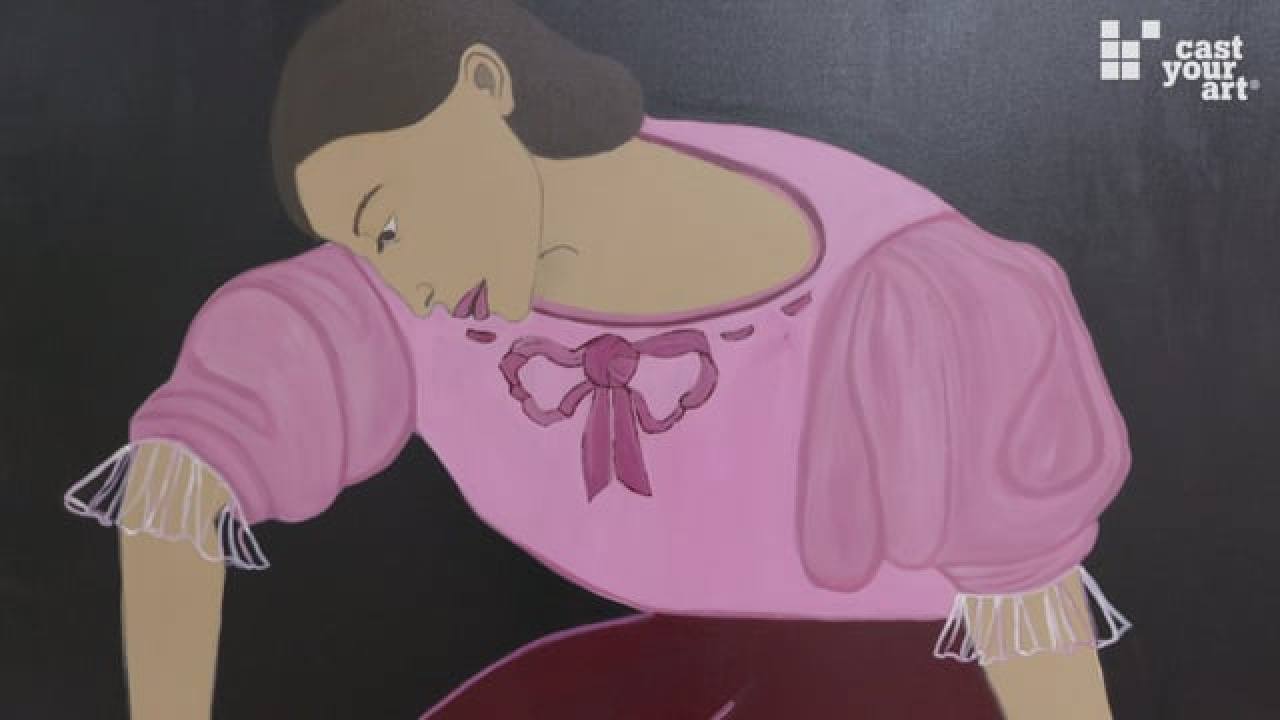
TABITA REZAIRE. Calabash Nebula. Cosmological Tales of Connection
With Calabash Nebula. Cosmological Tales of Connection, the Weltmuseum Wien opens a space in which the cosmos is no longer conceived as a distant object of conquest, but as a web of relationships to which we ourselves belong. In the exhibition film, artist Tabita Rezaire and Weltmuseum Director Claudia Banz speak about an artistic practice that brings together cosmological thinking, spirituality, and political responsibility.
Rooted in her life in French Guiana — a place where European space travel meets Indigenous knowledge systems — Rezaire questions the dominance of scientific imagery in shaping our understanding of the universe. Images produced by space telescopes have displaced many other cosmologies. In response, Rezaire proposes a plural narrative: Western rocket technologies coexist with shamanic visions, spiritual portals, water spirits, and the embodied cosmological practices of Maroon and Indigenous communities. The cosmos here is not something to be measured, but something to be experienced.
Works such as Des/astre, Omo Elu, and OMI: Yemoja Temple unfold a cosmological space of devotion. At its center stands Yemoja, the Yoruba water and mother deity, as a source of healing, protection, and transformation. The exhibition invites visitors to approach the cosmos not as observers, but as participants — to pause, to share, to offer, and to traverse inner landscapes.
A central concern of Rezaire’s work is the dismantling of hierarchical systems of knowledge, particularly those inherited from colonial power structures. She advocates for forms of knowing that are embodied, sensitive, spiritual, and relational — ways of understanding that do not separate, but connect human, geographic, and cosmic dimensions.
For Claudia Banz, the exhibition is also emblematic of the new series WMW Contemporary. In a museum whose collections are deeply shaped by colonial histories, contemporary art becomes a means of opening frozen narratives and retelling them from present-day perspectives. Rather than focusing on individual objects, the exhibition creates an environment — a space of experience that asks fundamental questions: Who tells which stories? And from whose point of view?
The film accompanies this multilayered exhibition as an invitation to personal experience — and as an encounter with a cosmos that does not exist beyond us, but flows through us.
https://www.weltmuseumwien.atDas könnte Sie auch interessieren
Helmut Grill - From Epicurus to Donald Duck
14. February 2013
MATTHEW WONG - VINCENT VAN GOGH. Letzte Zuflucht Malerei
19. March 2025
ANDERE RÄUME. collected #7 mit Werken aus der Bank Austria Kunstsammlung
30. December 2017
AMY CUTLER. Why Drawing Now, im Albertina Museum
21. November 2015
ERWIN WURM. The side of the absurd
17. October 2024
Wilhelm Scherübl - Transform
19. August 2009
HOW TO RECOGNIZE AN ALBRECHT DÜRER FAKE?
4. December 2020