

Vienna Secession - To every age its art and to art its freedom
The building of the Vienna Secession is regarded as the structural manifestation of the ideas of artist union around Gustav Klimt, Koloman Moser, Carl Moll and others who refused the conservative artistic spirit of the Vienna Künstlerhaus. A feature about this historical and contemporary venue of the arts.
Today the Vienna Secession, the union of Austrian artists, is the oldest independent exhibition centre dedicated to contemporary art worldwide. The building designed by the architect Joseph Maria Olbrich is regarded as the structural manifestation of the ideas of this artist’s union around Gustav Klimt, Koloman Moser, Carl Moll, Josef Hoffmann, Olbrich and others, whose members refused the conservative approach to art of the Künstlerhaus association at the turn of the century.
To confront the fin de siècle with a holistic art whose vitality would have its effect down to the ordinary everyday life! By means of the Secession building, this claim would obtain an actual location, in order to present art in a space-oriented and comprehensive way, within a synthesis of architecture, painting, sculpture, graphic art and decoration. The artistic approach with the building as its symbol still draws attention and now as then, the usage of the building causes excitement.
On of the most celebrated exhibitions was dedicated to Ludwig van Beethoven in 1902, a main work of which being the Beethoven Frieze by Gustav Klimt. On this 34-meter mural painting, the artist focused on Beethoven’s 9th symphony. The painting addresses mankind’s pursuit of happiness in various stages. Because of its explicit eroticism, Klimt’s work provoked admiration as well as severe criticism. At the time the Beethoven Frieze was situated in the left side aisle of the Secession’s main hall and was eventually removed in 1903. Today it is back in the Secession and installed in a specifically created room in the basement floor of the building.
With its spatial arrangement, the architecture of the Vienna Secession has remained relevant in our time. Its functionality and aesthetic peculiarity therefore offer ideal conditions for contemporary arts and exhibition activities. Thus, in accordance with the phrase carved above its entrance, to every age its art and to art its freedom, today the Vienna Secession accomplishes an internationally oriented program, presenting current artistic forms of expression in single and thematic exhibitions.
CastYourArt has created a feature about this historical and contemporary venue of the arts, giving an insight into the building, its architecture and history as well as its activities in contemporary art. (wh)
Das könnte Sie auch interessieren
Marten Spangberg - Slow Fall
30. April 2008
Bernhard Leitner - Sound Space Sculpture
21. March 2016
Albertina - Monet to Picasso. The Batliner collection.
15. January 2015
Edgar Lissel - On the rise and fall of images
18. November 2009
Götz Bury - Illusions
25. June 2008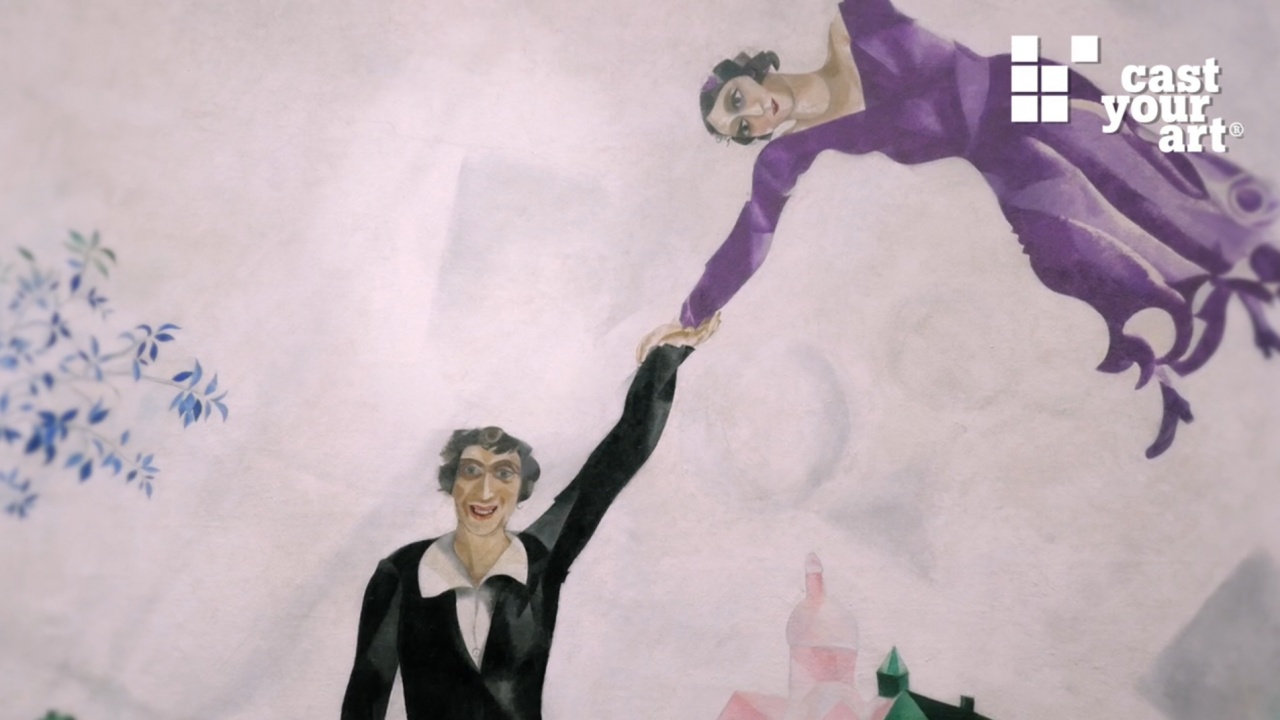
MARC CHAGALL. Der Spaziergang
1. March 2016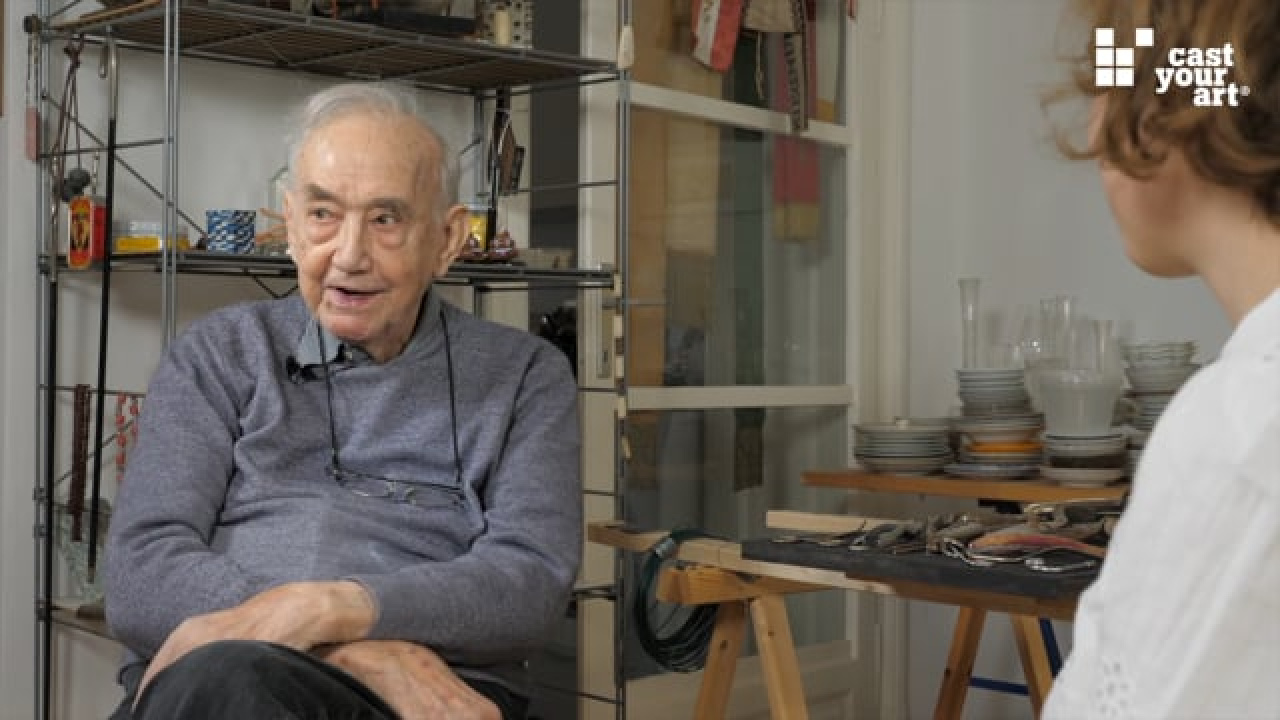
DANIEL SPOERRI. A Talk at his atelier and an exhibition-portrait at Bank Austria Kunstforum.
8. April 2021