PRESENCE AS ART. Ralph Gleis on Marina Abramović
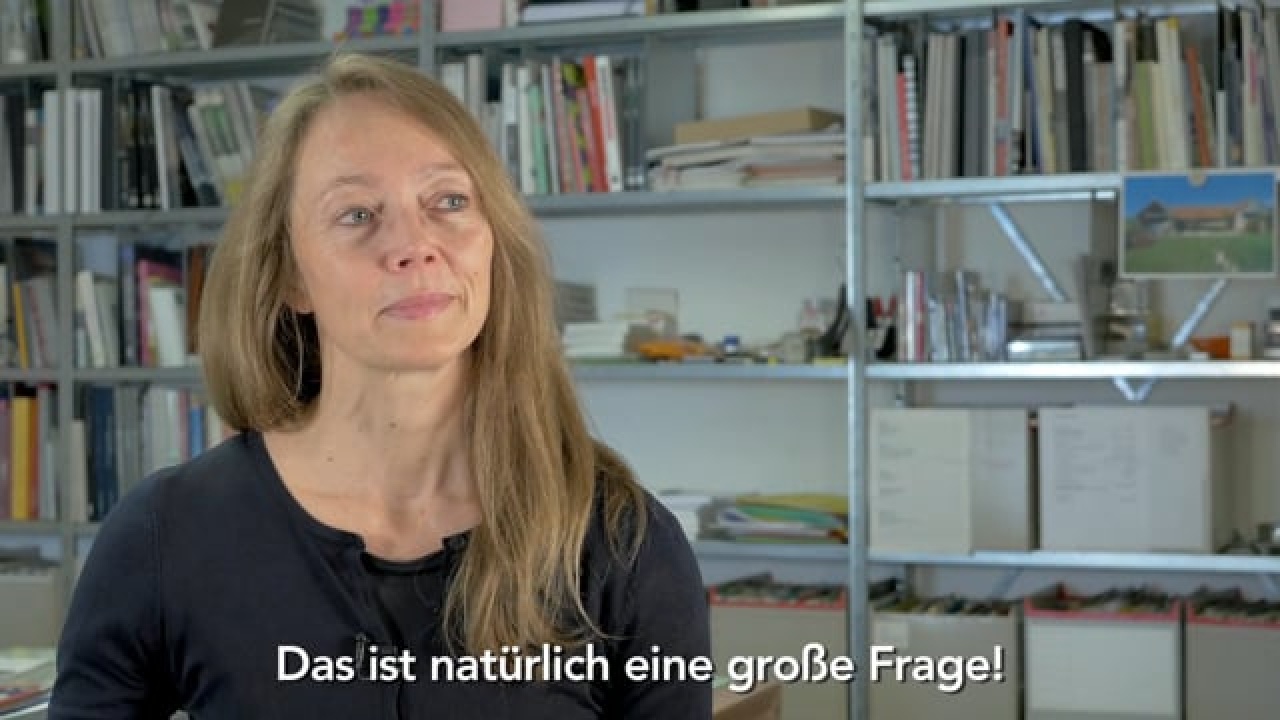
When Ralph Gleis speaks about Marina Abramović, he does not begin with theory, but with presence. He describes a woman who enters a room and immediately transforms it — someone whose life and work are so inseparable that art seems to pulse through every fiber of her being. Abramović, he notes, is a “full-blooded artist” in the most literal sense: nothing in her life exists outside of art, and yet she meets others with openness, humor, and a disarming warmth that counters the pain and vulnerability so often embedded in her work.
As Director General of the Albertina, Gleis situates Abramović not only as the most influential performance artist of our time, but also as a turning point for the institution itself. Performance art, long marginalized and slow to gain recognition, finds here a new and significant platform. The exhibition at the Albertina Modern — Austria’s first major retrospective of Abramović — marks both an acknowledgment of her historic impact and a deliberate step into new curatorial territory.
At the heart of Gleis’ reflections lies the conviction that performance art demands something rare today: full presence. It is an art form that unfolds only in the here and now, requiring a physical, emotional, and mental engagement from both artist and audience. Abramović’s works are not meant to be consumed from a distance; they challenge viewers to cross thresholds, to feel discomfort, to sharpen their awareness of their own bodies and their own being. In doing so, art becomes experience — immediate, demanding, and deeply personal.
This urgency gives the exhibition its contemporary relevance. In a world saturated with images and constant distraction, Abramović’s work resists easy documentation. It cannot be carried home as a photograph; it must be lived. Gleis describes performance as a dialogue — a mutual mirroring between artist and audience — where meaning arises through encounter rather than representation. The intensity of this exchange is what makes the experience so unforgettable.
The exhibition itself moves between stillness and provocation. Videos, photographs, drawings, and installations create spaces of contemplation as well as moments of confrontation. In works such as Imponderabilia, where visitors must physically pass between two naked bodies to enter the exhibition, the boundary between art and viewer dissolves. One does not merely observe art; one enters it, bodily and consciously.
Pain, suffering, and the awareness of mortality — Abramović’s three fundamental emotional forces—run through the exhibition like an undercurrent. Gleis speaks openly about the danger and extremity of her performances, the real risks she has taken, and the liberation that can emerge from such radical exposure. What remains is a heightened intensity that binds the audience to the work—and to one another.
This film offers a personal reflection on why Marina Abramović matters today: as an artist who tests limits, as a mirror for society, and as a reminder of what it means to be truly present.
https://www.albertina.atDas könnte Sie auch interessieren
MAX WEILER. Die Schenkung im Albertina Museum
22. January 2018
Remastered: Film
18. January 2018
Edvard Munch - Love, Death, and Loneliness
7. October 2015
THE BEAUTY OF DIVERSITY. An exhibition showcasing the diversity of current artistic positions in the collections of the Albertina
6. March 2024
ROBERT LONGO. Worlds Unseen, Truths Untold.
25. September 2024
HOW TO RECOGNIZE A FAKE? Copy or Original: Raphael?
29. December 2020
BEVK PEROVIC ARHITEKTI. Wiens Städtebau und zeitgenössische Architektur
7. May 2015